About Daniel Hirtz
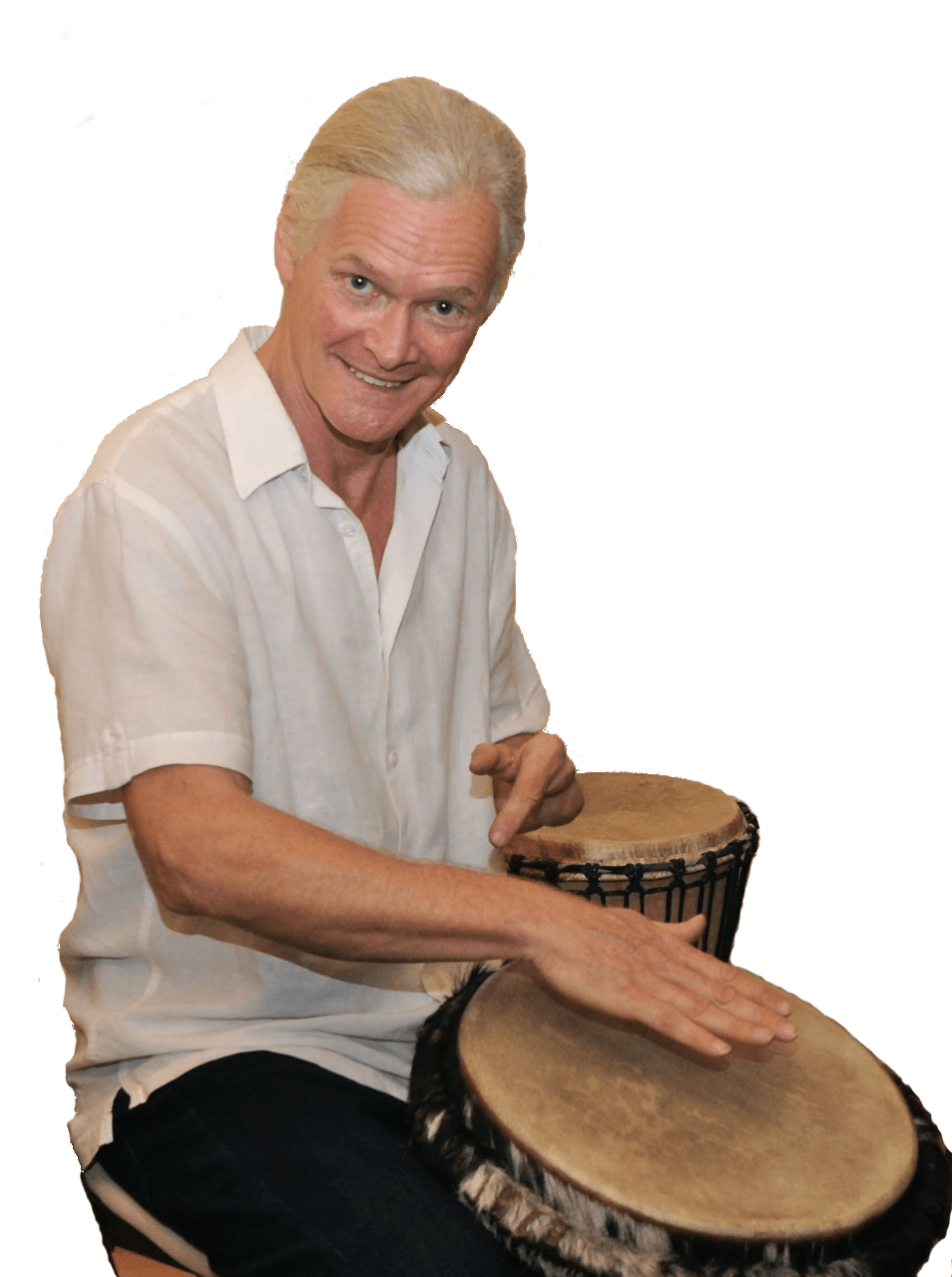
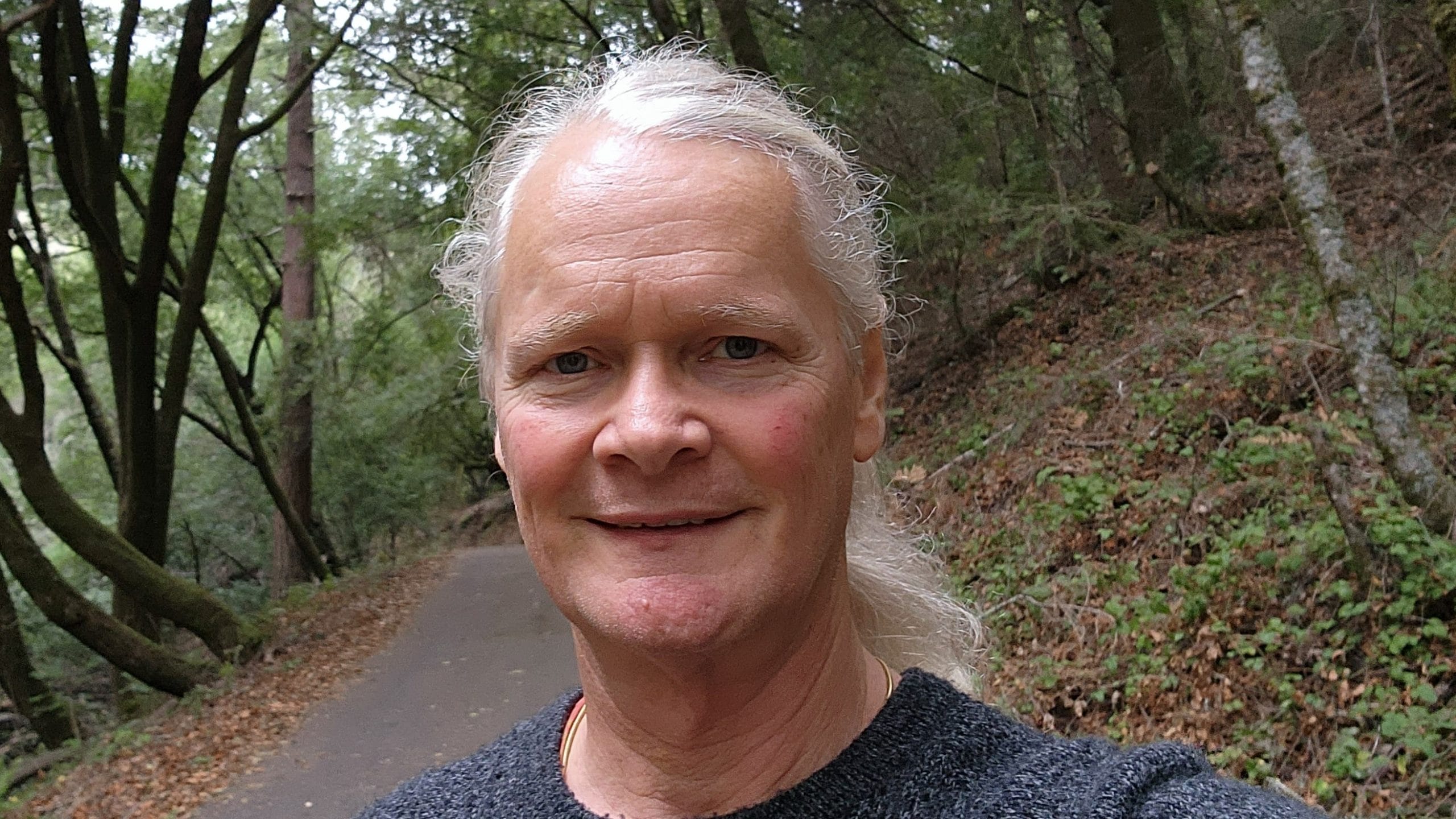
I grew up in Germany in a cultivated, secular family. Both my parents were humanists — grounded in reason, ethics, and the dignity of the human person. Art and music were taken seriously as forms of inquiry, not entertainment. My twelve years of Waldorf education extended that foundation — there, learning through the body wasn't philosophy, it was Tuesday morning. That whole formation never left me.
At thirteen, I lost three fingers building explosives. I was six years into piano lessons. I was going to play like Oscar Peterson.
In one moment, that was gone.
What happened next took forty years to understand. I began asking different questions. Not how do I play, but what is music? What is it that pulls me toward it? Does music even have to do with skill in the first place?
My first breath teacher was my grandmother. It was 1970. I was thirteen, just out of multiple surgeries, and I couldn't sleep — painkiller withdrawal had my body in a state it didn't know how to settle. My grandmother practiced yoga and knew pranayama, unusual for a German woman her age at that time. The counting, the elaborate sequences — she saw it was too much for me. So she gave me something simpler: watch your breath. Sigh every now and then. That was it. And it worked. I noticed it working. At thirteen, I started taking breath seriously. We kept talking about it when I visited her over the years. One of the roots of everything I teach now — complexity has to arise from and be held in simplicity — started there, with her.
When I crossed into Austria at twenty-one, I found Arnold Keyserling — a philosopher working at the intersection of consciousness, cosmology, and embodied practice — and I knew I had found what I was looking for. Within his circle at the Academy of Arts in Vienna, I began teaching rhythm and breath. The early shape of Holistic Tuning started to emerge.
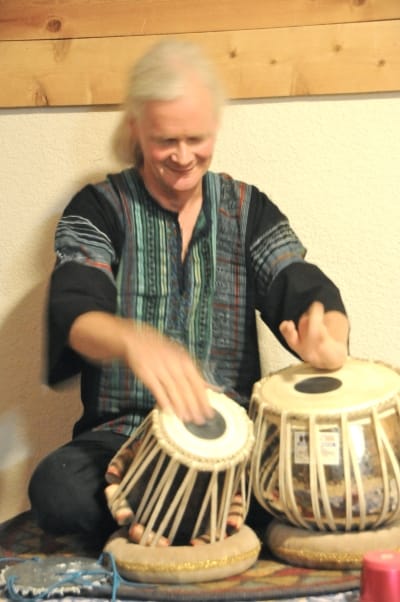
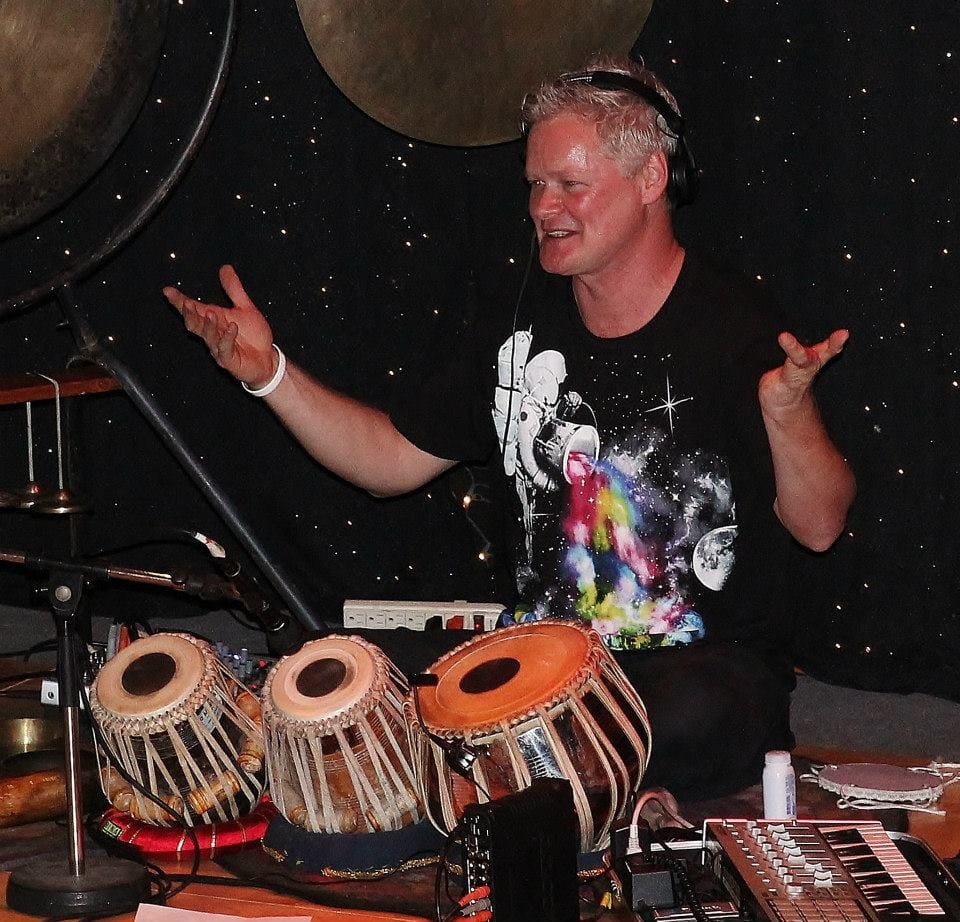
The tabla found me around the same time. A North Indian percussion instrument that takes years to begin, and a lifetime to know. I've been teaching tabla for over twenty-five years. Precision. Medicine. A way of arriving in the present moment the thinking mind can't argue with.
I came back to breath consciously through Ingrid, my partner. She found conscious connected breathing before I did, and brought it home. What I recognized in it was my grandmother, decades later, in a different form. My first formal training was with Günter and Silvana Griebl in Germany — rigorous, clear, grounded teachers who gave me the foundation to trust what I was working with.
From there the lineage opened. Leonard Orr — the founder of Rebirthing. Jim Leonard, who developed Vivation. Others along the way. What I built from all of it is my own: Conscious Adaptive Breathing, or CAB. Not a technique to master. A relationship to develop. There's no wrong way to breathe — only more conscious and less conscious ways. My work is to help people move in one direction.
Over forty years I've worked as a musician and teacher with individuals, groups, corporations, neurodivergent children, seniors in care facilities, and festival crowds. I've sat with people in their first conscious breath and watched something unlock that no therapy session had reached. I've watched a room full of strangers become a community in forty minutes through the shared pulse of a drum circle. I've seen what happens when people stop faking it and actually land in their bodies.
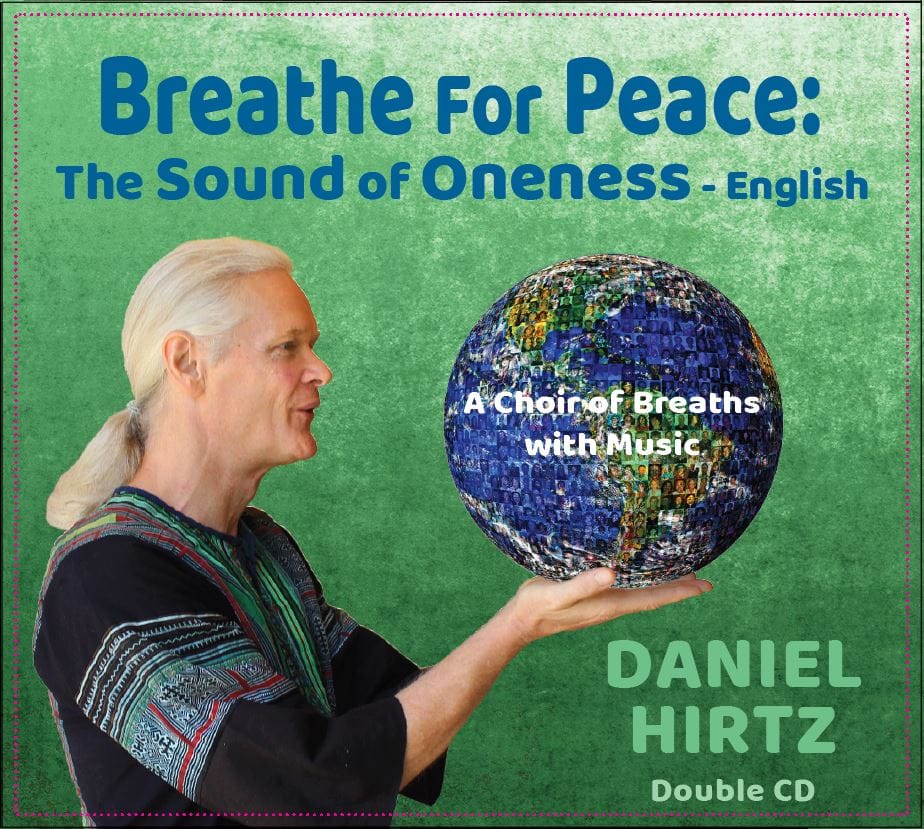
In 2020 I created Breathe for Peace — a musical meditation featuring the rhythmic breathing of over two hundred people from twenty-two countries. It's still one of the truest things I've made. The work since then — the Living Oneness project, Music for the People, the weekly empathy circles I co-facilitate with Ingrid — all of it is the same work wearing different clothes.
Oneness is not an idea. It's what happens when you breathe fully, play together, and stop pretending to be separate.
I live in San Francisco with Ingrid, whom I've loved for forty-five years. We live in a 3 generation household with my daughter Laila, our son-in-law Mike and 3 grandkids Tobias, Aidan and Audrey. My son Pablo is in Vienna. I'm a grandfather. I sleep five hours and feel fine about it.
If something here is landing — I'd love to hear from you. Book a free listening session with me.
“…. Life is not fragmented; it is not divided. It cannot be divided into spiritual and material, individual and collective…. And each passionate being who dares to explore beyond the fragmentary and superficial into the mystery of totality helps all humanity perceive what it is to be fully human. Revolution, total revolution, implies experimenting with the impossible. And when an individual takes a step in the direction of the new, the impossible, the whole human race travels through that individual. ” Vimala Thakar